
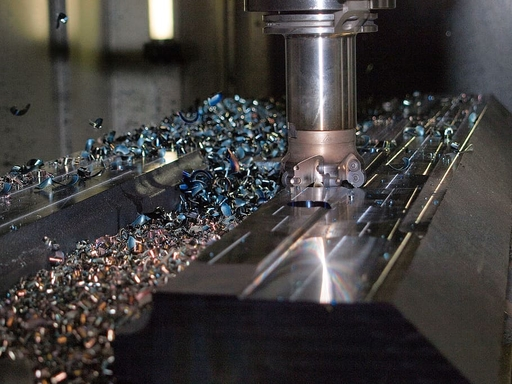
Aeroengine blades are core components of aviation equipment. Due to their complex surfaces, special materials, and extremely high precision requirements, they have long been technical challenges in the field of precision machining. A domestic high-end precision manufacturing enterprise has undertaken the batch processing project of aeroengine titanium alloy blades for domestic aviation manufacturing enterprises. Relying on a five-axis CNC machining center, intelligent process planning system, and standardized production processes, it has achieved stable mass production of 1,200 finished blades annually. All product indicators meet aviation-grade usage standards, making it a typical engineering case of domestic CNC high-end machining landing in the aviation field.
The processing object this time is an aviation low-pressure compressor blade, and the entire workpiece is made of TC4 titanium alloy. This material has high strength, poor thermal conductivity, and high cutting viscosity, making it prone to issues such as tool wear, workpiece chatter, and surface damage during processing. Additionally, the blade has a free-form surface structure with complex profile contours. The precision requirements vary across multiple areas such as the blade body, blade root, and damping platform. The overall dimensional tolerance is controlled at ±0.003mm, the surface roughness is Ra≤0.2μm, and the blade profile error must not exceed 0.02mm. Traditional three-axis machines are completely unable to achieve one-time molding processing, thus posing stringent requirements on equipment, processes, and fixtures.
In the early stages of the project, the technical team completed the design of the full-process technological scheme based on the characteristics of the workpieces. In terms of equipment selection, the enterprise adopted multiple domestic high-end five-axis CNC machining centers, paired with high-precision grating scales and a constant temperature control system, to control the temperature fluctuation within the machine's working area to within ±0.5℃, thus avoiding accuracy deviations caused by temperature deformation at the hardware level. During the process planning stage, technical personnel utilized professional 3D simulation software to complete tool path simulation, interference checking, and cutting parameter optimization. They abandoned the traditional step-by-step machining mode and adopted a one-time clamping, five-axis integrated cutting process to reduce positioning errors caused by multiple clamping. Considering the difficult-to-cut characteristics of titanium alloys, the team selected specialized carbide-coated cutting tools and gradually cut through three processes: rough machining, semi-finishing, and finishing. Rough machining mainly focuses on removing large amounts of material, using deep cutting depth and low spindle speed parameters to avoid tool breakage; semi-finishing completes contour finishing and reserves a uniform finishing allowance; finishing adopts high spindle speed and small feed rate strategies, combined with micro-lubrication cooling technology, which not only reduces cutting temperature but also eliminates the corrosion of the workpiece surface caused by residual coolant.
Fixture design is another key aspect of this project. Due to the thin wall and weak rigidity of the blade, ordinary fixtures are prone to causing workpiece deformation due to squeezing. The technical team has tailored a flexible positioning fixture, utilizing blade root positioning and multi-point auxiliary support methods. This ensures secure clamping while distributing the cutting force, effectively solving the problem of deformation in the processing of thin-walled parts. Additionally, the production line is integrated with an online inspection module. Upon completion of each machining process, the machine automatically triggers a three-dimensional online inspection, comparing the actual dimensions with the theoretical model in real time. In case of any accuracy deviation, the system automatically fine-tunes the tool path parameters, achieving an integrated closed-loop production process that combines machining, inspection, and compensation.
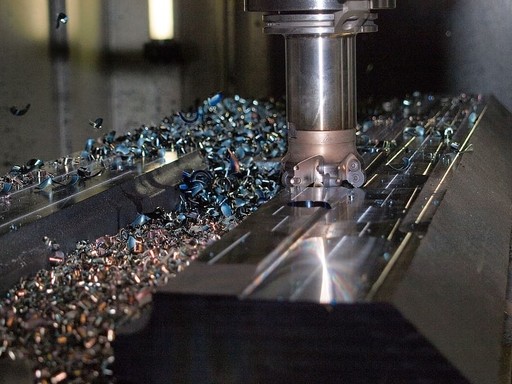
After the project was implemented, both production efficiency and product yield achieved significant breakthroughs. Compared to the traditional process of separate machining and manual grinding adopted in the early stage, the overall machining time for a single blade was reduced from 8 hours to 3.5 hours, representing a production efficiency increase of over 50%. The product yield increased from 78% to 99.2%, effectively solving common issues such as surface misalignment, surface scratches, and dimensional deviations. Up to now, the project has been operating stably for two years, with over 2,000 qualified blades delivered, all of which have passed rigorous inspections conducted by aviation quality control departments, including flaw detection, dimensional inspection, and mechanical property testing.
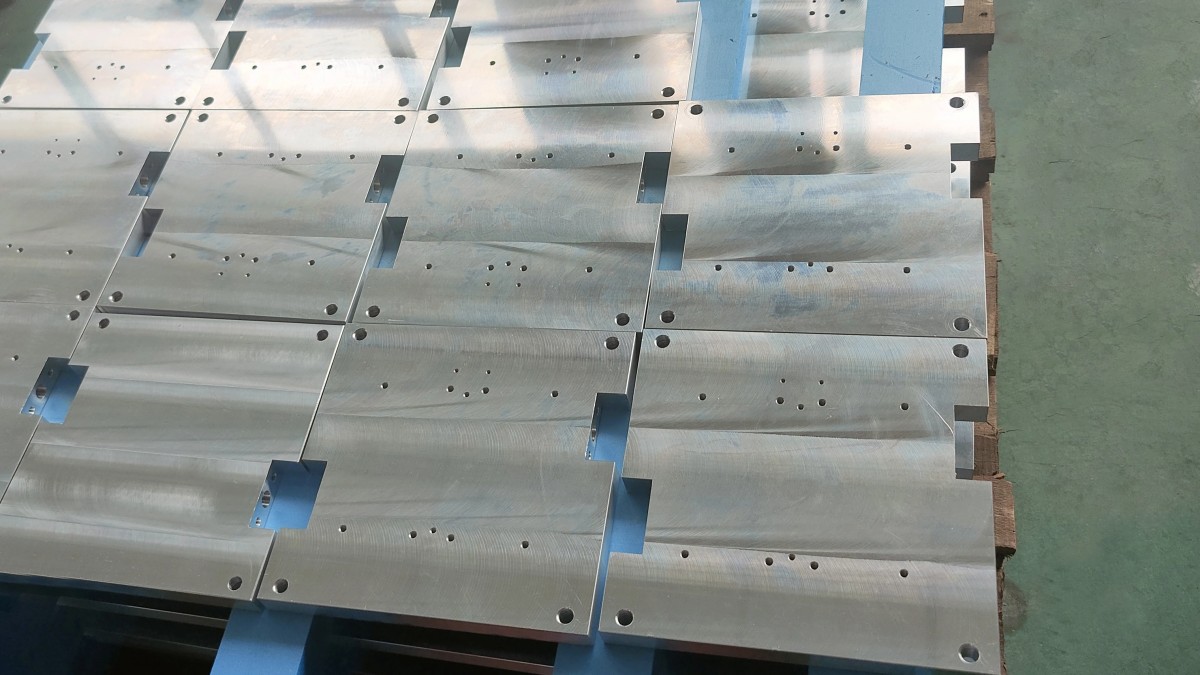
This engineering case fully verifies the application capability of domestic five-axis CNC equipment in the field of high-end aviation components. During the project implementation, the enterprise not only developed a mature processing technology system for complex titanium alloy surfaces but also accumulated complete technical experience in constant temperature processing, online inspection, and flexible tooling. With the rapid development of the domestic aviation industry, the demand for various precision and complex components continues to rise. This CNC machining engineering practice provides a reproducible and scalable practical model for enterprises in the same industry to enter the field of high-end aviation manufacturing. It also further confirms the maturity of domestic CNC machining equipment and process technology, promoting the independent development of the high-end precision machining industry chain.
Related Posts
Online Message
Thank you very much for writing to us. Please leave your message and contact information, we will reply to you within 24 hours.