
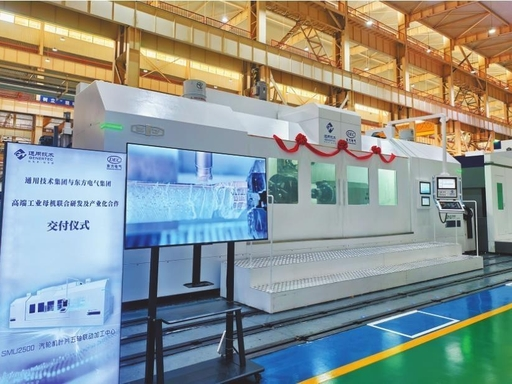
In the second quarter of 2026, China's CNC machining industry ushered in a pivotal turning point: five-axis linkage technology transitioned from being exclusive to the high-end to becoming prevalent in the mid-range. The price of domestic equipment decreased, coupled with improved precision, fundamentally reshaping the competitive landscape in the automotive parts, precision molds, 3C electronics, and other sectors. Industry data indicates that the market size of China's five-axis CNC machine tools reached 12.8 billion yuan in 2025 and is projected to increase to 15.7 billion yuan in 2026. This growth rate significantly outpaces the industry average, emerging as the core driving force behind the growth of the CNC industry.
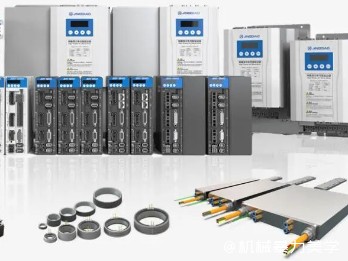
For a long time, five-axis machining technology has been applied only in high-end fields such as aerospace and military industries due to its expensive equipment and high technical threshold. Small and medium-sized manufacturing enterprises can only rely on three-axis machine tools for simple machining, and complex parts require outsourcing, which is costly, time-consuming, and difficult to ensure accuracy. In 2026, this situation changed completely: the price of domestic five-axis machining centers started from 2 million yuan in 2019 and dropped to the mainstream range of 800,000 to 1.2 million yuan, with some economical models as low as just over 600,000 yuan. For the first time, small and medium-sized factories have the ability to purchase in bulk. The price reduction is not at the expense of quality, but rather the cost optimization brought about by breakthroughs in core technologies - the maturity of domestic CNC systems has improved, and core components such as electric spindles and linear motors have been localized, reducing the overall equipment cost by more than 40%.
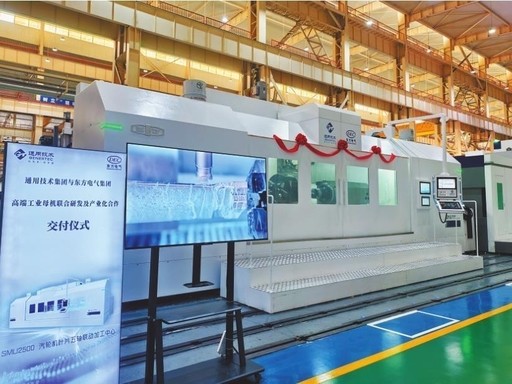
The simultaneous improvement of precision and stability is the core support for the popularization of five-axis technology. Previously, there was a 15%-20% accuracy gap between domestically produced five-axis machines and German (DMG MORI) and Japanese (Mazak) equipment. Nowadays, the gap has narrowed to within 10%. The mainstream domestically produced five-axis machine tools achieve a repeat positioning accuracy of 0.002mm and a positioning accuracy of 0.005mm, enabling stable IT6-level precision machining and meeting the needs of most mid-range manufacturing scenarios. The head of an auto parts enterprise in Zhejiang Province stated, "Previously, an imported five-axis machine cost over 2 million yuan, and maintenance costs hundreds of thousands of yuan. Now, domestically produced five-axis machines cost around 1 million yuan, with sufficient precision and fast after-sales response. The investment can be recovered in just one year."
The popularization of five-axis technology directly drives the upgrading of CNC machining modes. Traditional three-axis machine tools require multiple clamping operations for machining complex parts, resulting in large positioning errors and low efficiency. Taking the steering knuckle of new energy vehicles as an example, three-axis machining takes 90 minutes per piece, with 6 clamping operations and a pass rate of only 85%. Using domestic five-axis machine tools, all processes can be completed with one clamping operation, reducing the machining time to 28 minutes per piece, the number of clamping operations to 1, and the pass rate to 99.5%, with a production efficiency increase of 220%. In the field of precision molds, five-axis machine tools can directly machine complex surfaces without subsequent manual grinding, achieving a surface roughness of Ra≤0.8μm and extending the mold life by 30%.
The decline in costs and the widespread adoption of technology have given birth to a new ecosystem for the CNC machining industry. A large number of small and medium-sized enterprises specializing in five-axis machining have emerged in the Pearl River Delta and Yangtze River Delta regions, forming an industrial cluster where "high-end technology becomes accessible to the masses". These enterprises focus on mid-range markets such as new energy automotive parts, 3C structural components, and medical device parts. Leveraging their advantages of high cost-effectiveness, short delivery times, and high precision, they are gradually replacing imported equipment for processing orders. Some enterprises have even begun to undertake overseas mid-range precision parts processing business, significantly enhancing their international competitiveness. Simultaneously, the widespread adoption of five-axis technology has driven a surge in demand for professionals in programming, operation, maintenance, and other related fields. Vocational colleges have consequently established five-axis machining majors, gradually narrowing the talent supply gap and further supporting the large-scale development of the industry.
According to industry experts, as domestic five-axis technology continues to iterate and costs further decrease, the penetration rate is expected to exceed 35% by 2027. By then, three-axis machine tools will gradually withdraw from the complex parts processing market, and the CNC machining industry will form a new pattern of "five-axis as the mainstay, three-axis as a supplement". Meanwhile, the integration of technologies such as AI adaptive machining and digital twin simulation with five-axis equipment will further enhance machining efficiency and precision, driving mid-range manufacturing towards a transformation towards "high precision, high efficiency, and low cost", injecting strong momentum into the transformation and upgrading of China's manufacturing industry.
Related Posts
Online Message
Thank you very much for writing to us. Please leave your message and contact information, we will reply to you within 24 hours.