
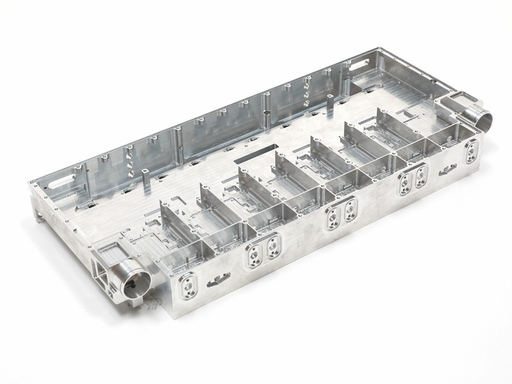
Medical devices have a direct impact on human health, and they impose far higher requirements on the processing precision, surface finish, material safety, and cleanliness of components than ordinary mechanical products. This is especially true for products such as orthopedic implants, surgical instruments, and core components of minimally invasive devices, where the processing tolerance is almost zero. A company in East China, specializing in the processing of precision medical components, has deep expertise in the field of CNC precision machining of medical-grade stainless steel and pure titanium components. It undertakes bulk orders for dental implants, orthopedic screws, and minimally invasive surgical instrument shafts. Through ultra-high-precision CNC equipment, proprietary processing techniques, and a dust-free production environment, it has established a CNC processing production line that meets national medical device production standards, becoming a benchmark project case in the field of medical precision manufacturing.
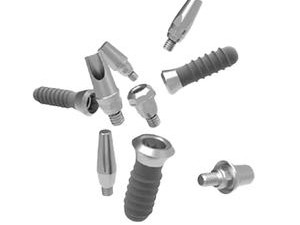
The processed products in this project mainly fall into three categories: medical pure titanium implant abutments, 316L stainless steel orthopedic locking screws, and minimally invasive surgical instruments with elongated shafts. All three types of workpieces are made of medical-grade special metals, which are characterized by corrosion resistance, good biocompatibility, and non-toxicity and harmlessness. However, their processing difficulties vary. The implant abutments are compact in structure, with a minimum diameter of only 2.5mm. They contain micro-threads, stepped holes, and precision conical surfaces. The overall dimensional tolerance is required to be ±0.002mm, and the surface must be free of burrs and tool marks, as these can affect the fit of the implant and the safety of human use. The orthopedic screws require extremely high precision in thread profile, and the surface roughness of the threads must reach a mirror-like level to ensure no tissue irritation occurs after implantation into the human body. The minimally invasive instrument shafts are ultra-long thin-walled parts with an aspect ratio exceeding 30, which are prone to bending and deformation during processing. The straightness tolerance must be controlled within 0.01mm. Additionally, all workpieces must undergo cleaning, polishing, and sterilization after processing. The entire production process must be free of oil, impurities, and metal debris residues.
In combination with the special requirements of medical products, the enterprise has established a dedicated CNC machining system from four dimensions: equipment, environment, process, and control. The production workshop is built according to medical industry standards as a Class 10,000 clean room, with zones designated for raw material storage, CNC machining, precision inspection, and cleaning and sterilization. The workshop maintains constant temperature and humidity, strictly controlling the entry of dust, insects, and external pollutants. In terms of equipment, all high-precision vertical CNC machining centers and serious CNC lathes are selected. The equipment's spindle runout is controlled within 0.001mm, equipped with a fully enclosed protective structure to prevent cutting fluid splashes and metal dust dispersion, meeting the production requirements of a clean workshop.
Process research and development is the core difficulty of this project. For the tiny and complex structure of pure titanium dental implant abutments, the technical team adopts micro diamond-coated cutting tools, utilizes ultra-low speed and micro-cutting mode, and combines it with food-grade environmentally friendly water-soluble cutting fluid, ensuring smooth cutting while avoiding chemical residue. For the processing of micro threads, a dedicated thread milling cutter is used in conjunction with a cyclic cutting program to shape step by step, eliminating issues such as thread breakage and burrs. For ultra-long thin-walled minimally invasive instrument rods, a segmented support and reverse feed processing technique is employed, optimizing the tool path trajectory, reducing the pulling force of cutting on the workpiece, and effectively controlling the bending deformation of the rod. After all processing steps are completed, instead of using traditional grinding methods to remove burrs, precision electrolytic deburring technology is adopted to achieve smooth treatment of both inner and outer surfaces without dead zones, without altering the dimensional accuracy of the workpiece.
In terms of quality traceability and process control, the enterprise has established a full lifecycle traceability system. Each workpiece, from raw material storage, CNC machining, inspection, cleaning to delivery, is assigned a unique production number. Machining equipment parameters, operators, and inspection data are all recorded and archived, meeting the regulatory requirements for medical devices. Each CNC machine undergoes precision calibration before starting work each day, and each batch of products undergoes three rounds of full sampling inspection. Precision equipment such as image measuring instruments, roughness meters, and universal tool microscopes are used to inspect dimensions, form and position tolerances, and surface quality item by item. Non-conforming products are directly isolated and destroyed, and are strictly prohibited from entering the next process.
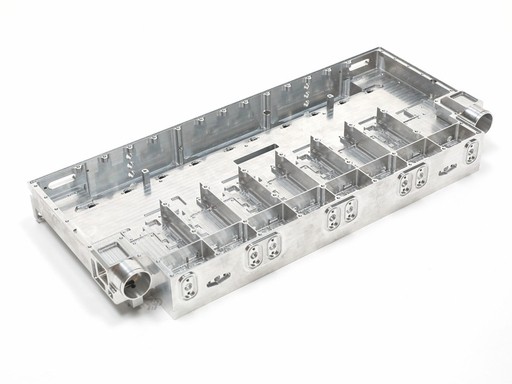
Since the project was officially put into operation, the entire CNC medical accessory production line has been operating stably, with an average monthly output of over 150,000 pieces of various medical precision components. The product pass rate for inspection has consistently maintained 100% throughout the years. The company has successfully passed domestic medical device supply chain audits and international biocompatibility testing. Leveraging stable quality and mature processes, the company's cooperative customers have expanded from multiple domestic top-tier hospital equipment suppliers to several overseas medical brands.
This engineering case fully demonstrates the application value of high-precision CNC machining technology in the field of high-end medical devices. The processing of medical components is a comprehensive test of precision, cleanliness, safety, and process stability. Relying on precision CNC equipment, customized machining processes, a clean production environment, and a strict quality control system, the enterprise has overcome multiple technical challenges such as micro-parts, thin-walled parts, and special metal processing. With the increasing demand for national health and the upgrading of the medical industry, the market for high-end precision medical devices continues to expand. This comprehensive CNC machining solution tailored for the medical industry provides complete practical experience for similar medical accessory processing enterprises and also promotes the development of the domestic medical precision machining industry towards higher standards and higher quality.
Related Posts
Online Message
Thank you very much for writing to us. Please leave your message and contact information, we will reply to you within 24 hours.