
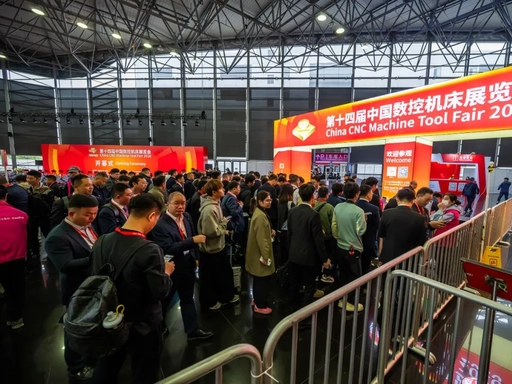
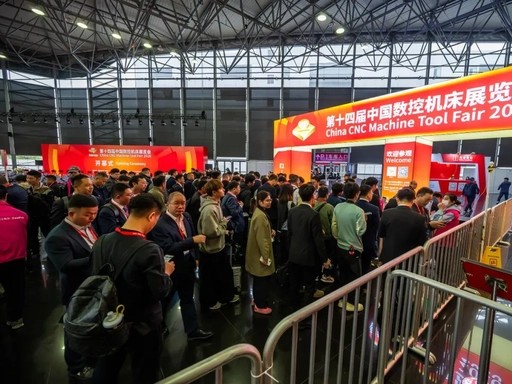
From April 21st to 25th, 2026, the 14th China CNC Machine Tool Fair (CCMT2026) successfully concluded at the Shanghai New International Expo Center. Themed "Digital, Connected, Smart Manufacturing", this edition of the exhibition covered a total area of 202,000 square meters, attracting over 2,000 exhibitors from 27 countries and regions worldwide. With international exhibitors accounting for over 30% and visitor attendance exceeding 271,000, it became the largest and most professional machine tool industry event in Asia in 2026. The exhibition showcased the latest achievements in AI empowerment, high-precision compounding, and green low-carbon technologies in the CNC machining field, marking a comprehensive transformation of China's CNC industry from scale expansion to quality improvement, and from technological follow-up to accelerated independent innovation.
Currently, the global manufacturing landscape is undergoing profound adjustments, and China is accelerating the cultivation of new productive forces. As the core support for precision manufacturing, CNC machining is a key foundation for high-end industries such as aerospace, new energy vehicles, and medical devices. This exhibition brings together leading domestic and international enterprises such as Demag Senjing, Mazak, Huazhong Numerical Control, and Guangzhou Numerical Control, showcasing cutting-edge products such as five-axis linkage machining centers, intelligent numerical control systems, and AI adaptive machining equipment, comprehensively presenting the latest breakthroughs and application scenarios of CNC machining technology. Among them, domestic high-end numerical control systems have performed impressively. Enterprises represented by Huazhong Numerical Control and Kude CNC have achieved stable positioning accuracy within 0.005mm for their mainstream systems, with repeatability accuracy controlled below 0.003mm. Their key performance indicators are fully comparable to top international products. The supporting rate of these systems in five-axis and above machining centers has jumped from less than 5% in 2020 to 38%.
Intelligentization and digital transformation have become the core highlights of this exhibition. AI technology has moved from pilot applications to large-scale implementation, with multiple CNC devices equipped with AI algorithms achieving real-time adaptive optimization. They can dynamically adjust cutting parameters based on processing load and temperature changes, automatically generate and optimize tool paths, significantly improving processing efficiency and product consistency. At the same time, the deep integration of the Internet of Things, digital twins, 5G technology, and CNC equipment has made remote diagnosis, predictive maintenance, and cloud-based collaborative production mainstream trends, effectively addressing pain points such as frequent manual intervention, slow fault response, and low production efficiency in traditional processing modes. Companies like DMG MORI have demonstrated the CELOS system, which can support the reconfiguration of production lines within 15 minutes, perfectly adapting to the flexible production needs of small batches and multiple varieties.
Green and low-carbon have become the rigid requirements and core competitiveness of the CNC machining industry. With the advancement of the "dual carbon" goals, customers in the fields of new energy vehicles, aerospace, and other industries have incorporated carbon footprint reports into the supplier qualification criteria. At the exhibition, green technologies and equipment such as micro-lubrication, dry cutting, and high-efficiency energy-saving motors were prominently displayed. The intelligent energy-saving systems of companies like Fanuc can dynamically adjust the power of servo motors, achieving energy savings of 15%-30%. Furthermore, technologies such as material recycling and waste recycling processing are continuously maturing, driving the transformation of CNC machining from "high energy consumption, high emissions" to "low energy consumption, zero waste," thereby supporting the sustainable development of the manufacturing industry.
It is noteworthy that the five-axis machining technology has accelerated its popularization and become a "rigid demand" in the mid-range manufacturing sector. In 2019, the selling price of domestic five-axis machining centers was generally over 2 million yuan, but by 2026, the price had dropped to the range of 800,000 to 1.2 million yuan, with some models priced as low as just over 600,000 yuan, and the penetration rate is expected to exceed 25%. The core reason for the price drop is that domestic CNC system technology has matured, narrowing the performance gap with international brands to within 10%, fully meeting the needs of scenarios such as automotive parts and mold processing. In the aerospace industry, five-axis CNC machining can complete the molding of complex curved surface parts, such as engine blades and fuselage frames, in one go, with an accuracy of ±0.001mm, balancing lightweight and high strength requirements.
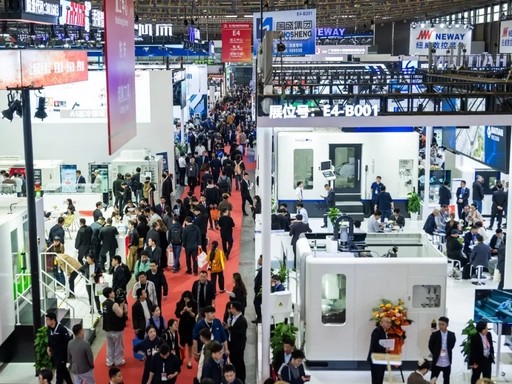
This CCMT2026 is not only a platform for technology showcase, but also a bridge for industrial cooperation and innovative exchanges. During the exhibition, multiple high-end forums, technical seminars, and supply-demand matchmaking events were held simultaneously, focusing on hot topics such as CNC machining technology innovation, industrial chain collaboration, and talent cultivation, promoting deep integration of industry, academia, and research. The MX Center, established by Demag Sen Seiki in collaboration with the University of Tokyo, plans to invest 1 billion yen in the research and development of next-generation manufacturing technologies and the cultivation of high-end talents, providing support for technological breakthroughs in the industry.
Currently, China's CNC machining industry has entered a critical period of high-quality development, facing challenges such as tackling high-end technologies and transforming talent structure, while also embracing market opportunities in emerging fields like new energy, semiconductors, and medical devices. With continuous breakthroughs in domestic technology and accelerated transformation towards intelligence and greenification, China's CNC machining industry will further consolidate its global competitive advantage, steadily moving from being a "manufacturing giant" to a "manufacturing powerhouse", and contributing Chinese strength to the transformation and upgrading of the global manufacturing industry.
Related Posts
Online Message
Thank you very much for writing to us. Please leave your message and contact information, we will reply to you within 24 hours.